





Demo 08.03.25
We fight together!
March 11, 2025, 5 pm online
On the occasion of International Women's Day, we invite you to #TradWives & Co - Antifeminist Influencers on TikTok and Instagram. In this lecture, a wide variety of anti-feminist female influencers on TikTok and Instagram will be examined. The focus will be on the various practices and narratives as well as the functioning of the platforms themselves.
Registration at: info@chancenvielfalt.uni-hannover.de
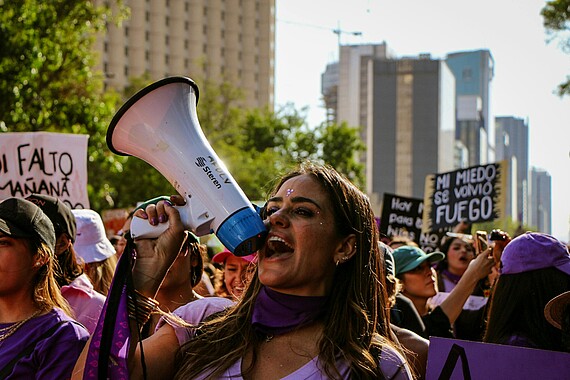
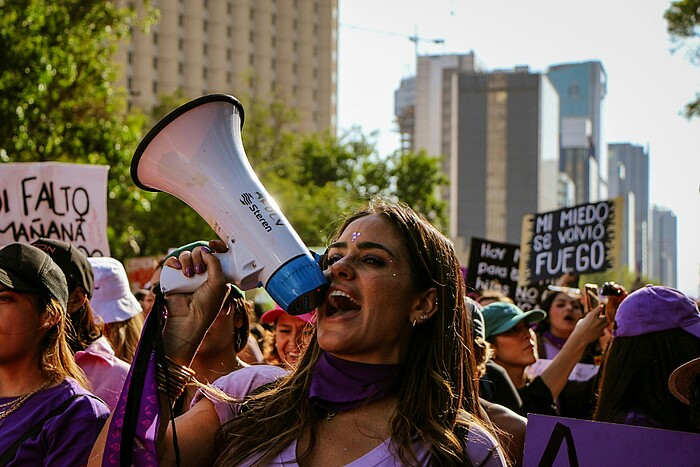
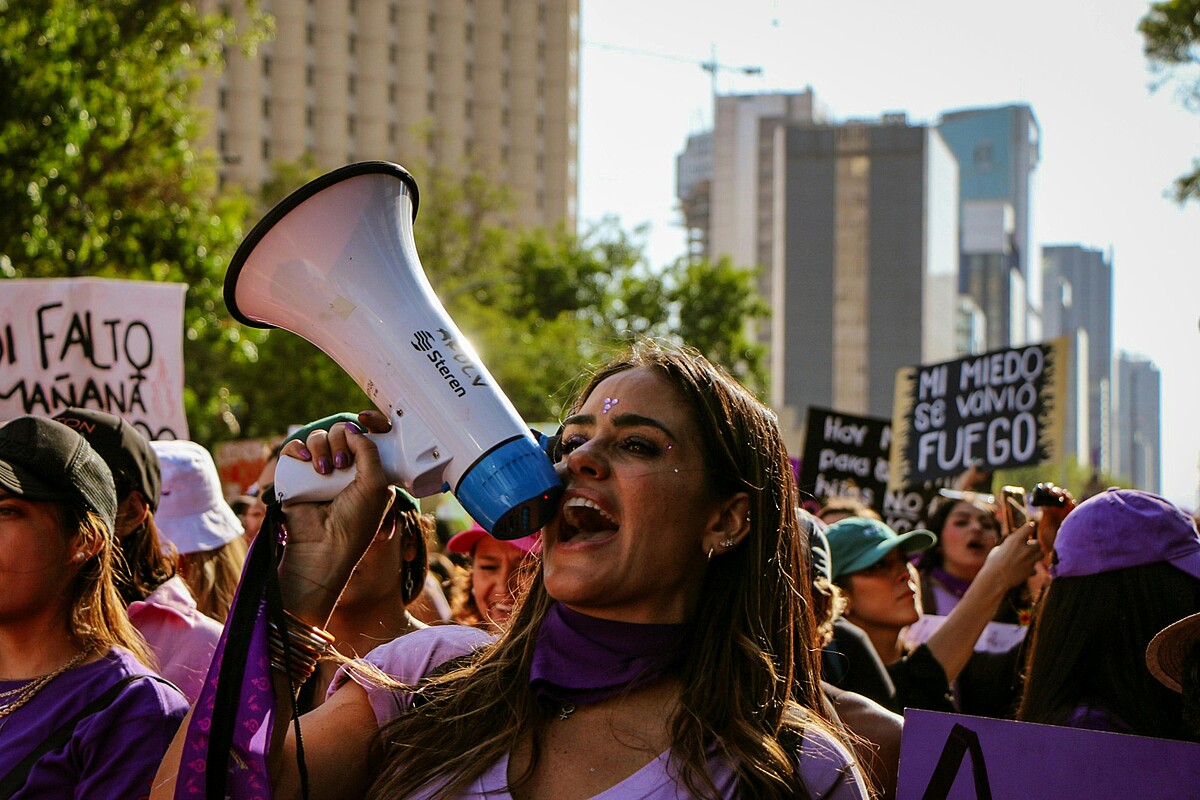
In Hanover, the annual demonstration starts on March 8 at 2 pm at Königsworther Platz and ends at Ni-Una-Menos-Platz. More information can be found on the Instagram account of 8m_hannover and femrat_hannover. There will be speeches at the start and end points. The Falken will also offer childcare during the demonstration in the form of a children's block that will run at the end of the demonstration. A block division will ensure an increased sense of security for discriminated groups.
International Women's Day is more than just a public holiday and a symbol in politics. Over 100 years ago, women took to the streets on March 8 to fight for women's suffrage. In the 1970s, the focus was on women's unemployment and even today it is still necessary to be vocal for political and social change.
The discrimination of women is also evident in medicine due to the gender health gap. A woman under 50, especially a young woman, is twice as likely to die of a heart attack than a man of the same age. In this case, it is assumed that she describes the same symptoms as the man being compared. However, only every 8th woman reports the classic male symptom of chest pain.[1] Heart attacks in women usually present with a feeling of pressure or tightness in the chest and possibly nausea, back pain or shortness of breath. These symptoms are often misinterpreted as an upset stomach and medical information about the differences between men and women remains inadequate.[2] In 2005, a Dutch study found that gender-specific topics were not consistently included in curriculum development and in 2006, only 9 out of 95 participating universities in the USA offered courses on women's health. There is a noticeable gender-specific data gap in medicine, there is a lack of studies, information in textbooks and therefore a lack of educated specialists.[3]
Global Women’s Strike
When it comes to gender equality, women are not the only ones who experience structural sexism and discrimination. The fact is that FINTA* people (abbreviation for women, inter*, non-binary, trans* and agender people) are increasingly affected by patriarchal violence. This is why it is often referred to as Feministischer Kampftag. In a study by LesMigraS, 44.7% of trans* people surveyed stated that they had experienced discrimination in the healthcare system.[4]
Although many positive changes have already been made in Germany, in comparison to other countries or the past, and gender injustice is less noticeable in some areas of life, March 8 and its demands remain relevant. Current political events have once again made it clear that these changes are not set in stone and can be reversed if we do not prevent it. Therefore, the following still applies: stay informed, connect with others and take to the streets!
[1] KAYLA WEBLEY ADLER, 2017: Women Are Dying Because Doctors Treat Us Like Men. Aufgerufen am: 21.02.2024
[2] HERZSTIFTUNG: Herzinfarkt bei Frauen: Diese Symptome sollten Sie kennen!. Aufgerufen am: 21.02.2024
[3] DIJKSTRA, A. F & VERDONK, P. & LAGRO-JANSSEN, A. L. M., 2008: „Gender bias in medical textbooks: examples from coronary heart disease, depression, alcohol abuse and pharmacology”. Medical Education 42 (10): 1021-8.
[4] AMELUNG, Till et al., 2017: Policy Paper Gesundheit des Bundesverbandes Trans*. Trans*-Gesundheitsversorgung. Forderungen an die medizinischen Instanzen und an die Politik. 18-22, Berlin: Bundesvereinigung Trans* e.V.. Aufgerufen am 29.02.2024
The book "Invisible Women" by Caroline Criado-Perez offers an easy introduction to gender-specific differences in the collection of scientific data. She provides examples from politics, technology and medical research, among others, and shows how women are excluded from data collection.


